
When discussing climate action in the construction sector, it is essential to recognise that a significant portion of the climate impact occurs before infrastructure becomes operational, during raw material extraction, production, transport, and construction, known as embodied carbon. Highlighting this early emphasises its importance to stakeholders.
Why is this relevant to this type of project?
The construction phase accounts for a substantial proportion of the carbon emissions associated with the life cycle of the tunnels in the Lisbon Drainage System, mainly due to high energy consumption and the use of materials with a high environmental impact (concrete and steel).
How can this be quantified?
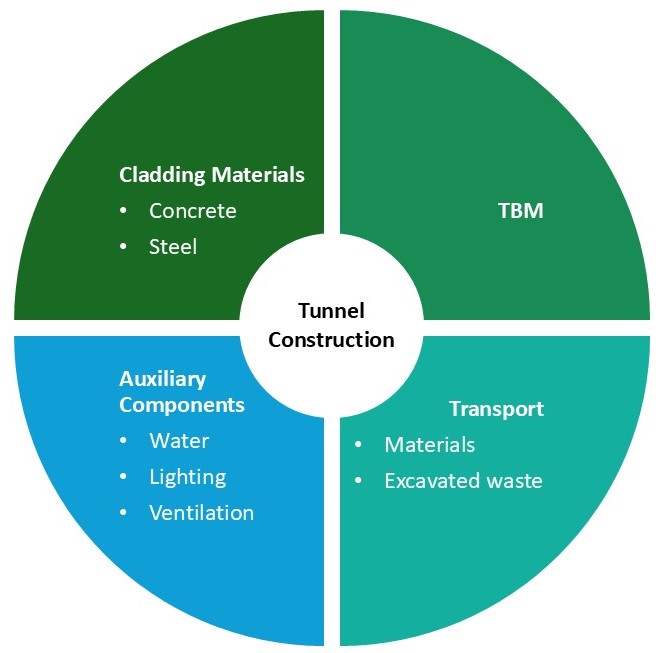
A calculation model can be adopted to quantify emissions during the construction phase, focusing on four main components: Tunnel Boring Machine (TBM), Transport, Auxiliary Equipment, and Lining Production. Clarifying these components aids understanding of the model’s scope.
Excavation using a tunnel boring machine (TBM): emissions calculated based on energy consumed per metre of tunnel, including the TBM’s daily energy consumption and the energy required for cutting.
Transport: this included construction materials, from their transport from the factories to the site and from the tunnel to the excavation face, as well as excavated waste, transported internally on site and externally for treatment or disposal. The external transport of waste was the main contributor, due to the high volume of soil removed and the long distances to the treatment facilities.
Auxiliary elements: consumption associated with ventilation, pumping, lighting and wear and tear on the tunnel boring machine’s cutters was considered.
Lining Production: quantification of the main construction materials used in the tunnels (concrete and steel), converted into CO₂-equivalent emissions, based on Environmental Product Declarations (EPDs) and existing studies.
Results and Conclusions
An analysis of emissions during the construction phase shows that the main contributors are two factors:
• Production of lining materials – particularly concrete, which clearly dominates the materials used in tunnels.
• Transport of materials and waste – particularly the off-site transport of excavated soil, which accounts for a significant proportion of emissions.
The study highlights the potential of decarbonisation strategies to make a difference, such as reducing cement use, adopting sustainable alternatives, optimising transport, reusing excavated soil, and monitoring auxiliary consumption more effectively, thereby encouraging stakeholders to take meaningful action.