
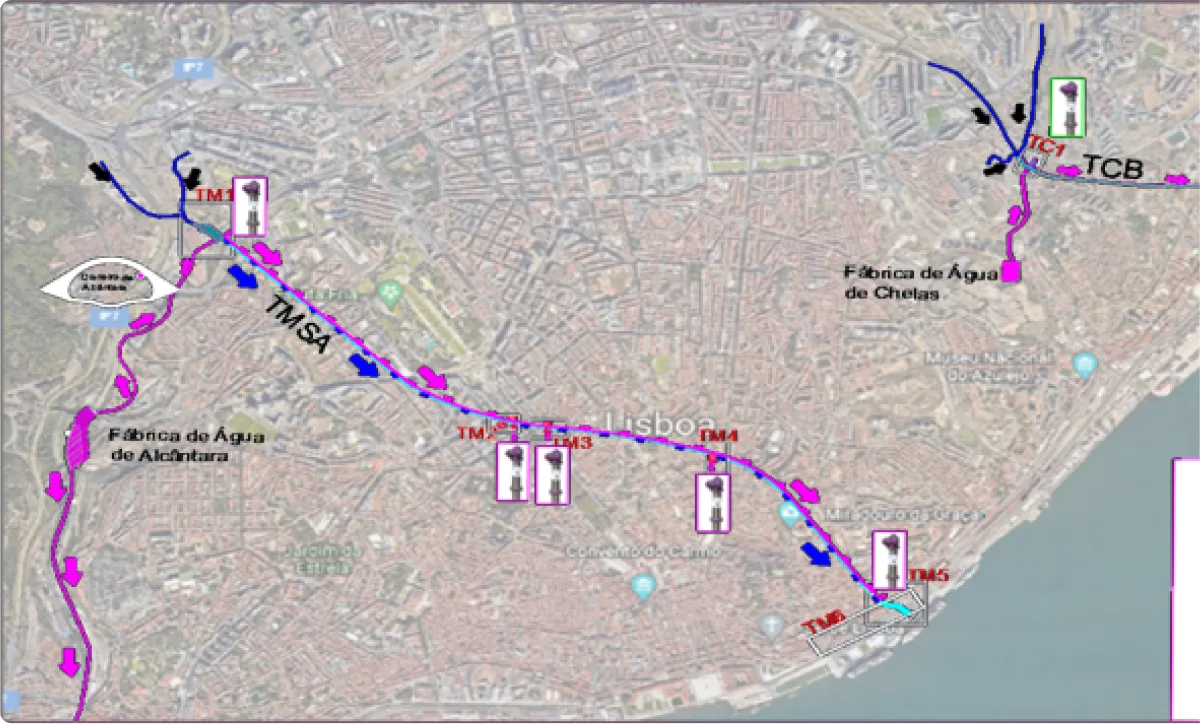
Operational carbon in the context of the Lisbon Drainage Tunnels
During the operational phase of the Lisbon Drainage Tunnels and associated infrastructure, carbon emissions are expected to be released into the atmosphere, primarily associated with energy consumption:
- The operation of the drainage system and the anti-pollution basin;
- The pumping equipment for the planned recycled water network (Water+) ;
- Scheduled during maintenance activities, including cleaning operations and routine inspections, with any necessary preventive or corrective measures to be taken should any anomalies be detected.

Furthermore, the commissioning of the tunnels helps to reduce the area’s vulnerability and exposure to flooding, minimising the associated material damage and socio-economic impacts and, consequently, the need for repair, replacement and rehabilitation work. A reduction in carbon emissions is therefore expected compared with a scenario without this infrastructure.
Understanding the quantification of emissions is crucial for stakeholders to evaluate the project’s contribution to climate mitigation and its alignment with environmental policies.
In line with the European ‘Do No Significant Harm’ (DNSH) principle, the project must ensure that it is compatible with the European Union’s environmental objectives.
In view of the above, particularly about climate change mitigation and adaptation objectives, it is essential to assess the emissions balance throughout the project’s life cycle, comparing the emissions generated during the implementation and operational phases with the emissions avoided through the reduction in flood damage (clean-up, reconstruction, amongst others) resulting from the tunnels becoming operational.
What method is used to estimate operational emissions?
The goal was to assess the project’s net emissions impact over 100 years, considering various hydrological and climatic scenarios and their likelihoods, to demonstrate long-term climate benefits.
To this end, the following were considered:
- Operational emissions from system operation:
Calculated primarily based on the operation of the pressurised recycled water network, considering the installed capacity and the expected operating time of the planned electromechanical pumping equipment.
- Operational emissions from system maintenance:
As the tunnels only operate following significant rainfall events and have hydraulic characteristics conducive to self-cleaning, maintenance activities were assumed to be infrequent and of short duration, resulting in residual emissions
- Only direct, tangible damage relating to buildings and public spaces, including road infrastructure, as these have historically been the most affected and account for the predominant share of potential emissions avoided.
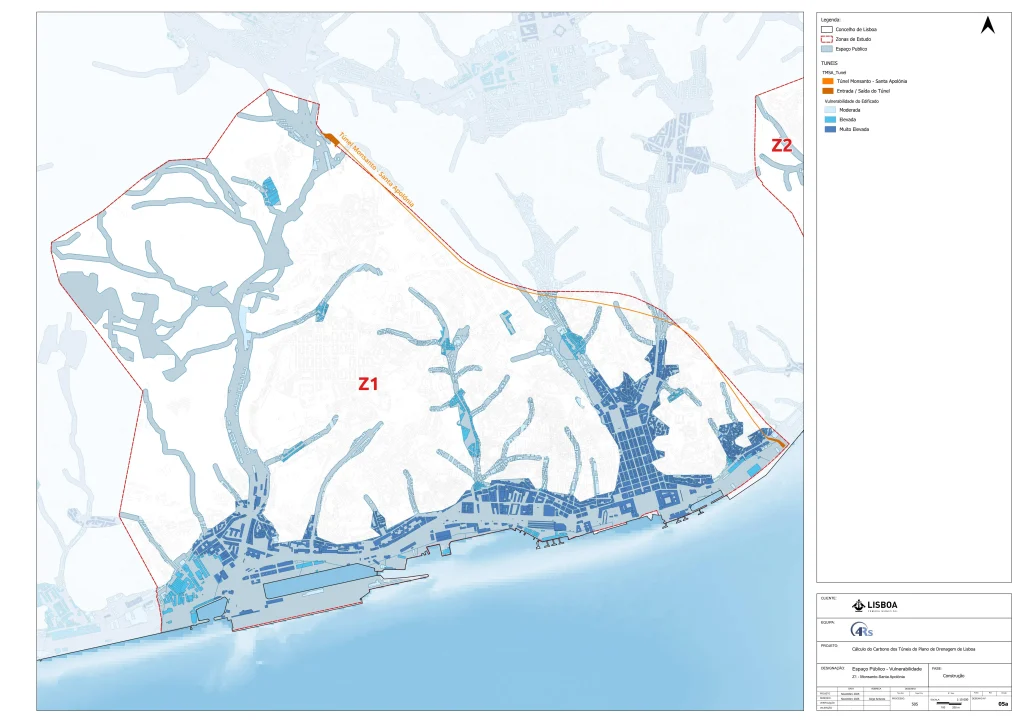
- The areas likely to benefit were identified based on flood vulnerability and the type of built environment, establishing a relationship between water depth and the expected level of damage, which was subsequently converted into carbon emissions using reference values based on the extent of repair/rehabilitation and the type of infrastructure/building.

What were the key findings?
Overall, the methodology demonstrated that operational emissions are minimal relative to the significant flood-damage-reduction benefits, reinforcing the project’s environmental efficiency.
The analysis indicates a long-term reduction in emissions that could reach several hundred thousand tonnes of CO₂ equivalent over 100 years, showing that the climate benefits more than offset initial emissions and emphasising the project’s sustainability value.
It is also worth noting that additional benefits, such as renewable energy integration, such as the planned small-scale hydroelectric plant, could further enhance the project’s climate advantages, motivating stakeholders to support future enhancements.