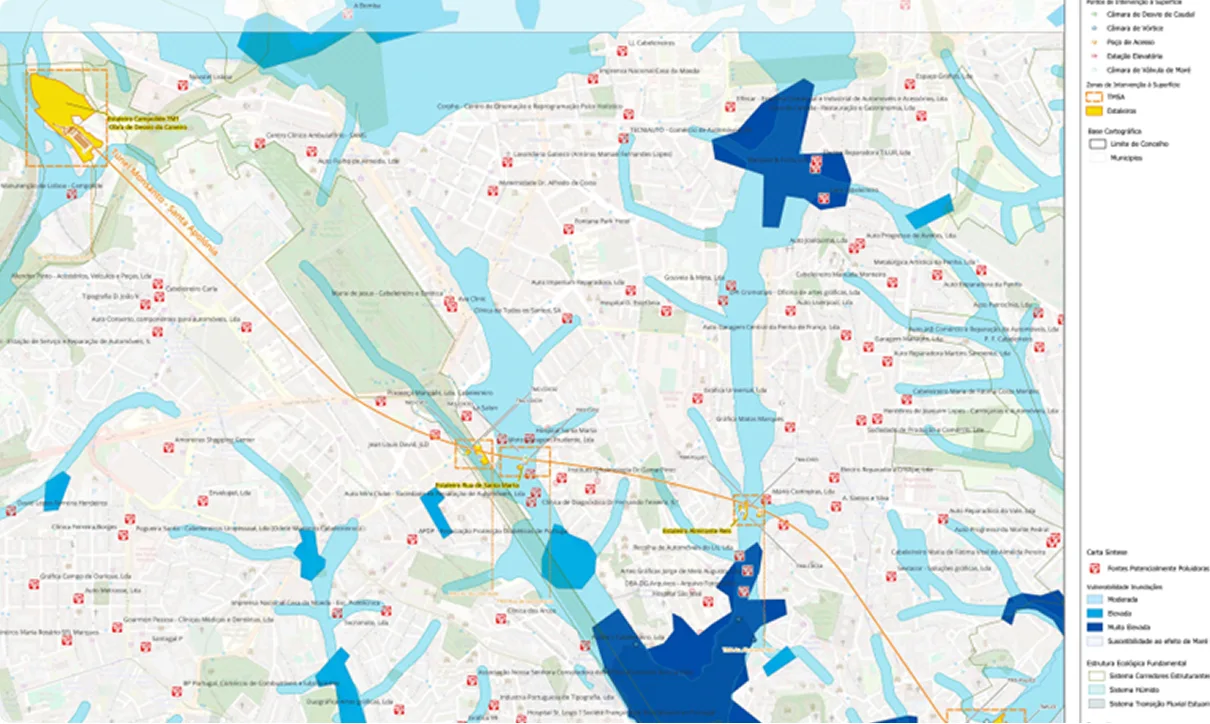
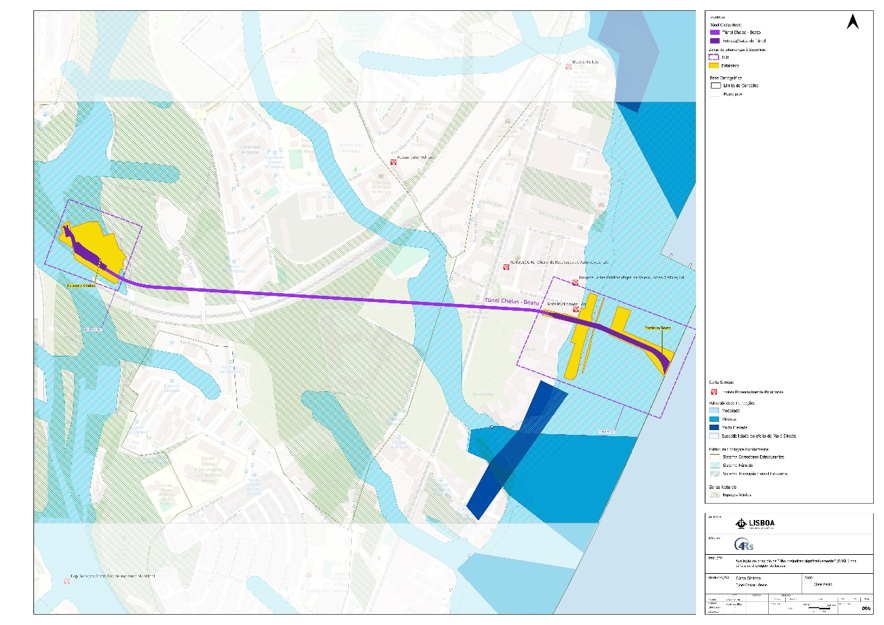
The construction of the Lisbon Drainage Tunnels forms part of the Lisbon General Drainage Plan (PGDL 2016–2030). It is a key infrastructure project that enhances the city’s hydraulic resilience, providing reliable flood prevention and climate adaptation benefits for the community.
The infrastructure is essentially underground, constructed using a tunnel-boring machine (H2Oli), which minimises surface occupation and interference with the established urban fabric. The system incorporates complementary efficiency and sustainability solutions, namely anti-pollution basins, the reuse of treated water from the Alcântara and Chelas Water Treatment Plants, and the installation of a small-scale hydroelectric plant linked to the TMSA.
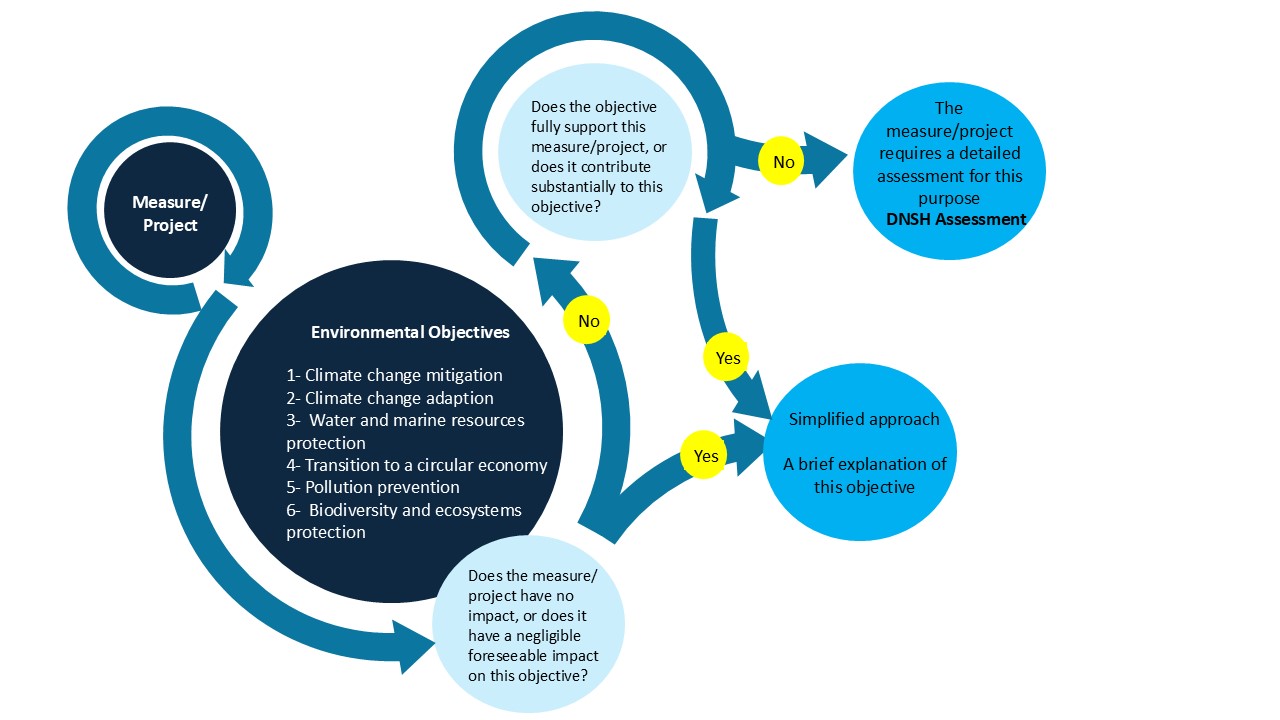
The project was assessed in accordance with the DNSH principle, as set out in Regulation (EU) 2021/241 and Regulation (EU) 2020/852 (Taxonomy), ensuring stakeholders can trust that it aligns with EU environmental standards and regulatory requirements.
In the field of climate change mitigation, a life-cycle analysis of the project was carried out, including emissions associated with the construction, operation and end-of-life phases. Although the construction phase involves significant consumption of materials, energy and transport, with associated GHG emissions, the assessment showed that the cumulative benefits arising from the prevention of flood damage (reduction in emissions associated with the reconstruction of buildings, clean-up operations and the restoration of infrastructure) more than offset the initial impact. The planned small-scale hydroelectric plant reinforces this contribution through the generation of renewable energy.
The project serves as a key structural measure for climate change adaptation, designed with future climate scenarios in mind, ensuring hydraulic robustness and capacity to withstand more frequent and intense extreme weather events, thereby enhancing Lisbon’s urban resilience.
Regarding the protection of water and marine resources, the system promotes more efficient management of stormwater flows, prevents uncontrolled discharges, and helps improve the quality of surface water. The restoration solutions for the Tagus Estuary have been designed to minimise hydraulic and sedimentary impacts, including the widening of channels and the installation of deflectors that reduce discharge velocity and promote rapid dilution.
As for the transition to a circular economy, although the project does not structurally incorporate recycled materials, it ensures proper waste management and efficient use of resources, and promotes a closed water cycle through the reuse of treated water for non-potable purposes (irrigation, washing and the fire-fighting network).
About pollution prevention, no permanent sources of atmospheric, aquatic or soil emissions have been identified during the operational phase. The impacts of construction are temporary and can be mitigated; strict control measures are planned, including pollution control basins and environmental management plans.
Finally, about the protection of biodiversity and ecosystems, the underground nature of the infrastructure minimises land take and ecological fragmentation. No protected habitats or species were identified in the areas directly affected, and the hydraulic solutions adopted ensure that no significant impacts on the Tagus Estuary are anticipated.
The assessment showed that the project complies with the DNSH principle, causing no significant harm to the EU’s environmental objectives and, on the contrary, making a net positive contribution to climate change mitigation and adaptation, thereby strengthening Lisbon’s urban resilience in the medium and long term.